

Partes interesadasStakeholders
Principales partes interesadas del sistema educativo de la Región de Murcia que participan en el proyecto LeadEx.Key stakeholders of the Region of Murcia’s education system taking part in the LeadEx project.


LeadEx reúne a las principales partes interesadas de la Región de Murcia
El 19 de septiembre, la Consejería de Educación y Formación Profesional celebró la presentación oficial de LeadEx – Learning about the Educational Approach to Develop Excellence, proyecto europeo cofinanciado por Interreg Europe. El acto reunió a las principales partes interesadas del sistema educativo murciano para abordar los retos y oportunidades compartidos en la mejora de las políticas educativas.
Presidida por el consejero Víctor Marín, la sesión subrayó la importancia del diálogo y la colaboración:
«La educación es, por naturaleza, un proyecto compartido, y solo escuchando a todos los agentes lograremos una educación de todos y para todos».— Víctor Marín, consejero de Educación y Formación Profesional
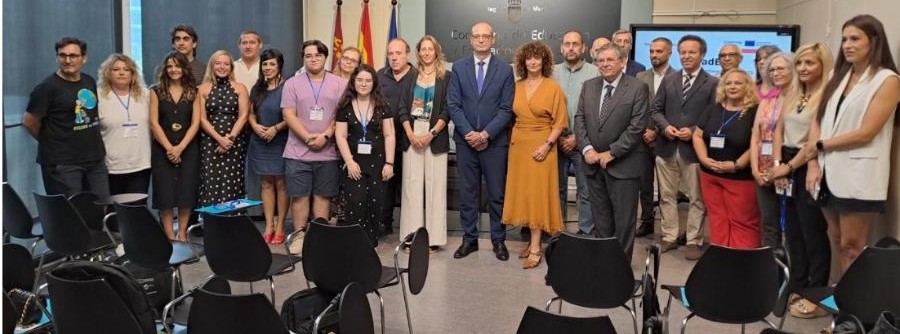
En la presentación participaron representantes del Consejo Escolar de la Región de Murcia, asociaciones de directores (ADEIP-RM, DIRECMUR y ADES), la Federación de Estudiantes (FEMAE), organizaciones de familias (FAPA-RM, FAMPACE, CONFAPA, CONFAMUR y CONCAPA), las universidades de la Región (UMU, UPCT y UCAM), la Federación de Municipios, las organizaciones empresariales de la enseñanza (CECE Murcia, UCOERM y Escuelas Católicas Murcia) y Plena Inclusión Región de Murcia, en representación de las familias de personas con discapacidad intelectual o del desarrollo.
El consejero destacó el papel decisivo de las partes interesadas para enriquecer el diagnóstico regional y concretar medidas que refuercen la equidad, la innovación y la calidad educativa.
El encuentro abrió además un espacio de intercambio en el que centros, asociaciones, instituciones y entidades sociales pudieron compartir perspectivas y crear nuevas sinergias. Con este paso, LeadEx inicia en Murcia un proceso colaborativo que continuará en los próximos años para consolidar un sistema educativo más justo, inclusivo y orientado al futuro.
LeadEx celebra una reunión de coordinación en línea con las principales partes interesadas de Murcia
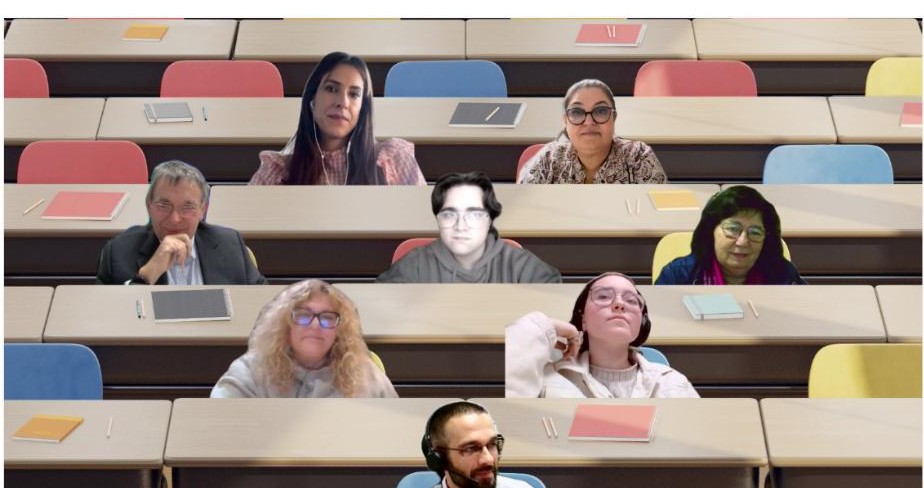
El proyecto LeadEx celebró ayer una reunión de coordinación en línea con las principales partes interesadas de la comunidad educativa de la Región de Murcia. La sesión, organizada por la Consejería de Educación y Formación Profesional, tuvo como objetivo revisar los avances de los primeros meses del proyecto y definir las prioridades de la siguiente fase.
Durante la reunión, los participantes repasaron los logros del primer semestre, como el lanzamiento del proyecto, la constitución de los grupos de partes interesadas y el estudio inicial realizado en Murcia. El debate puso de relieve el impulso positivo generado y reafirmó el compromiso del proyecto con el refuerzo de las políticas de desarrollo profesional continuo del profesorado.
El equipo repasó también el trabajo previsto para el segundo semestre, que se centrará en cerrar el diagnóstico educativo regional, identificar una buena práctica regional en desarrollo profesional continuo y avanzar en el análisis comparado entre regiones socias. Buena parte de la reunión se dedicó a preparar el seminario educativo interregional y la visita de estudio que se celebrarán en Estonia en marzo de 2026. Los socios están recopilando aportaciones temáticas, materiales e intereses concretos para ayudar a definir el programa de la visita.
La reunión transcurrió en un clima constructivo, con la mirada puesta en el futuro y un propósito compartido. Los próximos pasos consistirán en mantener la coordinación, perfilar las aportaciones regionales y colaborar estrechamente con Estonia como país anfitrión. LeadEx avanza con paso firme hacia sus próximos hitos y refuerza su misión de mejorar las políticas educativas mediante la cooperación y el aprendizaje compartido.
LeadEx refuerza la coordinación regional al inicio del tercer semestre
La red de partes interesadas de Murcia revisa los logros alcanzados y fija las prioridades de la nueva fase, con la visita de estudio a Montenegro como hito principal.
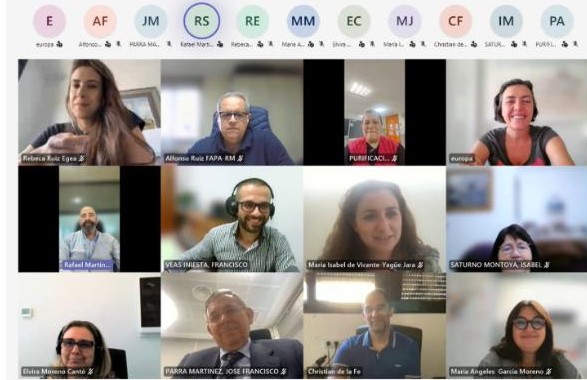
El proyecto LeadEx celebró ayer, lunes 25 de mayo de 2026, a las 17:00, una reunión de coordinación en línea con la red de partes interesadas de la Región de Murcia para revisar los avances logrados y fijar las prioridades del tercer semestre. Organizada por la Consejería de Educación y Formación Profesional de la Región de Murcia, la reunión fue una oportunidad importante para reforzar la colaboración entre los participantes y garantizar una visión compartida de la siguiente fase.
La sesión combinó una revisión del trabajo de los semestres anteriores con un debate orientado a las actividades de los próximos meses. Los participantes valoraron los avances del segundo semestre y destacaron los progresos logrados en distintos ámbitos del proyecto.
Entre los principales logros se citaron la consolidación de los mecanismos de coordinación interregional, la implicación continuada de las partes interesadas regionales, la finalización del trabajo de diagnóstico regional y la identificación de buenas prácticas educativas en las regiones socias. Se subrayó también el trabajo de comunicación y difusión —publicaciones, boletines, presencia en redes sociales y participación en eventos europeos—, que ha reforzado el alcance y el impacto del proyecto.
El debate pasó después a la planificación del tercer semestre, que abre una nueva etapa centrada en convertir el análisis previo en acciones prácticas y oportunidades de aprendizaje colaborativo. Entre las prioridades presentadas figuraron el análisis de los resultados del segundo semestre con las partes interesadas regionales, la selección de una buena práctica regional centrada en la inclusión, la diversidad y la excelencia, y la continuidad de las actividades de transferencia de conocimiento y cooperación interregional.
Una parte importante de la sesión se dedicó a preparar el próximo seminario educativo interregional y la visita de estudio a Montenegro, previstos del 6 al 8 de octubre de 2026. Las partes interesadas repasaron los objetivos y resultados esperados de la visita, que permitirá intercambiar experiencias, identificar enfoques educativos innovadores y reforzar la cooperación entre regiones socias. Los participantes destacaron el valor de estas actividades como espacios de aprendizaje de políticas y reflexión colectiva a escala europea.
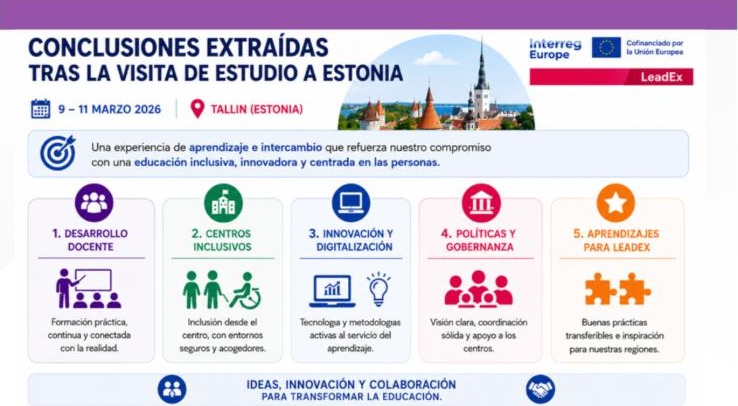
La reunión repasó también las lecciones aprendidas en la visita de estudio a Estonia y la importancia de seguir tendiendo puentes entre sistemas educativos mediante el intercambio de conocimientos y prácticas transferibles. Se hizo especial hincapié en que las experiencias y evidencias reunidas en el proyecto sirvan para mejorar a largo plazo las políticas educativas inclusivas y de calidad.
La reunión transcurrió en un clima colaborativo y con la vista puesta en el futuro, reflejo del compromiso de las partes interesadas de la Región de Murcia con el proyecto. Como socio líder, la Región de Murcia sigue reforzando las estructuras de coordinación y cooperación que harán posible el éxito de las próximas actividades y contribuirán al objetivo de LeadEx: promover sistemas educativos inclusivos, innovadores y excelentes mediante la cooperación europea y el aprendizaje compartido.
Deslice para ver todas las fotos →
LeadEx brings together key Stakeholders in the Region of Murcia
On 19 September, the Regional Ministry of Education and Vocational Training held the official presentation of LeadEx – Learning about the Educational Approach to Develop Excellence, a European project co-funded by Interreg Europe. The event gathered the main Stakeholders of the Murcian education system to discuss shared challenges and opportunities for improving educational policies.
Chaired by Regional Minister Víctor Marín, the session highlighted the importance of dialogue and collaboration:
«Education is, by nature, a shared project, and only by listening to all Stakeholders will we achieve an education for everyone and by everyone.»— Víctor Marín, Regional Minister of Education and Vocational Training
The launch brought together representatives of the Regional School Council of Murcia, associations of school leaders (ADEIP-RM, DIRECMUR and ADES), the Federation of Students (FEMAE), parent organisations (FAPA-RM, FAMPACE, CONFAPA, CONFAMUR and CONCAPA), universities in the Region (UMU, UPCT and UCAM), the Federation of Municipalities, education employers’ associations (CECE Murcia, UCOERM and Escuelas Católicas Murcia), as well as Plena Inclusión Región de Murcia, representing families of people with intellectual and developmental disabilities.
Minister Marín stressed that Stakeholders play a decisive role in enriching the regional diagnosis and in shaping concrete measures to strengthen equity, innovation and quality in education.
The meeting also created a space for exchange, where schools, associations, institutions and social organisations were able to share perspectives and build new synergies. With this step, LeadEx in Murcia enters a collaborative process that will continue over the coming years, working to consolidate a fairer, more inclusive and forward-looking education system.
LeadEx holds an online coordination meeting with Murcia’s key stakeholders
The LeadEx project held an online coordination meeting yesterday, bringing together key stakeholders from across the Region of Murcia’s education community. The session, organised by the Regional Ministry of Education and Vocational Training, aimed to review the progress made during the first months of the project and to outline the priorities for the upcoming phase.
During the meeting, participants reflected on the achievements of the first semester, including the successful launch of the project, the establishment of the stakeholder groups and the initial study carried out in Murcia. The discussion highlighted the positive momentum generated so far and reaffirmed the project’s commitment to strengthening policies on Continuous Professional Development for teachers.
The team also looked ahead to the work planned for the second semester, which will focus on finalising the regional educational diagnosis, identifying a regional good practice in CPD, and advancing the comparative analysis between partner regions. A significant part of the meeting centred on preparations for the Interregional Educational Seminar and Study Visit that will take place in Estonia in March 2026. Partners are now gathering thematic contributions, materials and specific interests to help shape the programme of the visit.
The atmosphere of the meeting was constructive and forward-looking, with a shared sense of purpose. The next steps will involve continued coordination, refinement of the regional inputs and close collaboration with Estonia as host country. LeadEx continues to move confidently towards its upcoming milestones, reinforcing its mission to improve educational policies through cooperation and shared learning.
LeadEx Strengthens Regional Coordination as the Third Semester Begins
Murcia’s stakeholder network reviews previous achievements and sets priorities for the upcoming phase, with the Montenegro Study Visit as a major milestone.
The LeadEx project held an online coordination meeting yesterday, Monday, 25 May 2026 at 17:00, bringing together the Region of Murcia’s stakeholder network to review the progress achieved so far and establish the priorities that will guide the project during its third semester. Organised by the Regional Ministry of Education and Vocational Training of the Region of Murcia, the meeting represented an important opportunity to strengthen collaboration among participants and ensure a shared vision for the next phase of implementation.
The session combined a review of the work carried out during previous semesters with a forward-looking discussion focused on the activities planned for the coming months. Participants reflected on the progress achieved during the second semester and highlighted the positive developments made across different areas of the project.
Among the main achievements discussed were the consolidation of interregional coordination mechanisms, the continued involvement of regional stakeholders, the completion of regional diagnostic work and the identification of educational good practices across partner regions. Participants also underlined the work undertaken in communication and dissemination activities, including project publications, newsletters, social media visibility and participation in European events, which have contributed to strengthening the project’s outreach and impact.
The discussion then moved towards the planning of the third semester, which officially begins a new stage focused on transforming previous analysis into practical actions and collaborative learning opportunities. Key priorities presented during the meeting included the analysis of second-semester results together with regional stakeholders, the selection of a regional good practice focused on inclusion, diversity and excellence, and the continuation of knowledge transfer and interregional cooperation activities.
A significant part of the session focused on preparations for the upcoming Interregional Educational Seminar and Study Visit in Montenegro, scheduled to take place from 6 to 8 October 2026. Stakeholders reviewed the objectives and expected outcomes of the visit, which will provide an opportunity to exchange experiences, identify innovative educational approaches and strengthen cooperation among partner regions. Participants highlighted the value of these activities as spaces for policy learning and collaborative reflection at European level.
The meeting also revisited lessons learned from the previous Study Visit to Estonia and reflected on the importance of continuing to build bridges between educational systems through the exchange of knowledge and transferable practices. Particular emphasis was placed on ensuring that the experiences and evidence gathered throughout the project can support long-term improvements in inclusive and high-quality education policies.
The atmosphere of the meeting was collaborative and forward-looking, reflecting the strong engagement of the Region of Murcia’s stakeholders in the implementation of the project. As Lead Partner, the Region of Murcia continues to reinforce coordination and cooperation structures that will support the successful delivery of future activities and contribute to LeadEx’s wider objective of promoting inclusive, innovative and excellent educational systems through European cooperation and shared learning.
Swipe through all the photos →
LeadEx abre el cuarto semestre con su red de partes interesadas de la Región de Murcia
La cuarta reunión del Grupo Regional de Stakeholders hace balance de la visita de estudio a Montenegro y pone en marcha la búsqueda de una buena práctica regional en innovación educativa y digitalización.
El proyecto LeadEx celebró el lunes 23 de noviembre de 2026, a las 17:00, la cuarta reunión del Grupo Regional de Stakeholders de la Región de Murcia, en modalidad en línea a través de Microsoft Teams. Organizada por la Consejería de Educación y Formación Profesional, a través del Servicio de Programas Educativos, la sesión reunió a representantes del Consejo Escolar de la Región de Murcia, la Federación de Municipios de la Región de Murcia, la Federación de Asociaciones de Madres y Padres «Juan González» (FAPA-RM), FAMPACE, la Federación Murciana de Asociaciones de Estudiantes (FEMAE), Plena Inclusión Región de Murcia, FERE-CECA Región de Murcia, la Universidad de Murcia y la Universidad Católica San Antonio de Murcia (UCAM).
La reunión comenzó con el balance del tercer semestre (mayo – octubre de 2026), dedicado a la inclusión, la diversidad y la excelencia. Se repasaron el seguimiento técnico y financiero del proyecto, el Steering Committee n.º 3 celebrado en Budva (Montenegro) el 6 de octubre, la tercera reunión del grupo, del 25 de mayo, y el formulario de aportación de buenas prácticas, cuyas propuestas permitieron seleccionar la buena práctica regional presentada en Montenegro. También se destacaron las acciones de difusión en la web del proyecto y en LinkedIn, así como el repositorio de documentación compartido con todas las entidades del grupo.
A continuación se presentaron las conclusiones del seminario educativo interregional y la visita de estudio a Montenegro (Budva y Kotor, 6–8 de octubre de 2026), en los que los socios compartieron siete buenas prácticas. La Región de Murcia presentó INCLU-YO, un programa de transformación inclusiva de los centros con modelado en el aula a cargo de los Centros de Recursos de Educación Inclusiva (CREI): 13 centros de educación especial actúan como CREI, con 590 casos atendidos en el curso 2025–2026, 3.461 horas de modelado en el aula y una valoración de 4,53 sobre 5 por parte de los centros. Una representante de Plena Inclusión Región de Murcia formó parte de la delegación regional y compartió su experiencia: subrayó que, en inclusión educativa del alumnado con discapacidad, la Región de Murcia se encuentra a la altura —e incluso por delante en algunos aspectos— de otros países europeos.
De la visita se extrajeron varias ideas clave para mejorar nuestro instrumento político, el Plan Estratégico de Calidad Educativa 2022-2028: las figuras puente que conectan escuela, alumnado y familias (Eslovenia y Croacia), la orientación accesible con criterios comunes (Estonia), el bienestar emocional dentro del horario lectivo (Montenegro) y la diversidad lingüística y cultural del alumnado como recurso en la formación profesional (Dinamarca).
El encuentro abrió después el cuarto semestre (noviembre de 2026 – abril de 2027), centrado en la innovación educativa y la digitalización. La Consejería planteó como posibles buenas prácticas el Aula del Futuro, las Aulas EDIT del Plan Prodigi-e y Código Escuela 4.0, e invitó a todas las entidades a proponer otras experiencias de cualquier ámbito a través de un formulario abierto, disponible hasta el 11 de diciembre de 2026. A partir de las propuestas recibidas se seleccionará la buena práctica que la Región de Murcia presentará en la próxima visita de estudio y seminario educativo interregional en Aarhus (Dinamarca Central), prevista del 20 al 22 de abril de 2027, donde se celebrará también el Steering Committee n.º 4. El semestre incluirá, además, la revisión intermedia del proyecto ante Interreg Europe.
En el turno de ruegos y preguntas, las entidades se interesaron por las actividades del programa dirigidas a las partes interesadas y por el impacto de la digitalización y la inteligencia artificial en el bienestar del alumnado, un tema que ya surgió en los debates de las visitas a Estonia y Montenegro y que se espera abordar también en Dinamarca Central.
Con esta reunión, la Región de Murcia, como socio líder, mantiene el diálogo continuo con sus partes interesadas y refuerza su participación en cada fase de LeadEx, con el objetivo de promover sistemas educativos inclusivos, innovadores y excelentes mediante la cooperación europea y el aprendizaje compartido.
Deslice para ver todas las fotos →


LeadEx Opens Its Fourth Semester with the Region of Murcia’s Stakeholder Network
The fourth meeting of the Regional Stakeholder Group reviews the Study Visit to Montenegro and launches the search for a regional good practice in educational innovation and digitalisation.
On Monday, 23 November 2026 at 17:00, the LeadEx project held the fourth meeting of the Region of Murcia’s Regional Stakeholder Group online via Microsoft Teams. Organised by the Regional Ministry of Education and Vocational Training through its Educational Programmes Service, the session brought together representatives of the Regional School Council, the Federation of Municipalities of the Region of Murcia, the parents’ federations FAPA-RM “Juan González” and FAMPACE, the Murcia Federation of Student Associations (FEMAE), Plena Inclusión Región de Murcia, FERE-CECA Región de Murcia, the University of Murcia and the Catholic University of Murcia (UCAM).
The meeting opened with a review of the third semester (May – October 2026), focused on inclusion, diversity and excellence. Participants went over the project’s technical and financial monitoring, Steering Committee No. 3 held in Budva (Montenegro) on 6 October, the group’s third meeting on 25 May, and the good practice submission form, whose proposals made it possible to select the regional good practice presented in Montenegro. Dissemination through the project website and LinkedIn was also highlighted, together with the documentation repository shared with all the organisations in the group.
The conclusions of the Interregional Educational Seminar and Study Visit to Montenegro (Budva and Kotor, 6–8 October 2026) were then presented, where partners shared seven good practices. The Region of Murcia presented INCLU-YO, a programme for the inclusive transformation of schools through in-class modelling delivered by the Inclusive Education Resource Centres (CREI): 13 special education schools act as CREI, with 590 cases supported in the 2025–2026 school year, 3,461 hours of in-class modelling and a rating of 4.53 out of 5 from participating schools. A representative of Plena Inclusión Región de Murcia was part of the regional delegation and shared her experience, stressing that, in the educational inclusion of students with disabilities, the Region of Murcia is on a par with — and in some respects ahead of — other European countries.
Several key ideas emerged from the visit to improve our policy instrument, the Strategic Plan for Quality in Education 2022-2028: bridging figures connecting schools, students and families (Slovenia and Croatia), accessible guidance with common criteria (Estonia), emotional well-being within school hours (Montenegro), and students’ linguistic and cultural diversity as a resource in vocational education and training (Denmark).
The meeting then opened the fourth semester (November 2026 – April 2027), focused on educational innovation and digitalisation. The Regional Ministry put forward the Classroom of the Future, the EDIT classrooms of the Prodigi-e Plan and Código Escuela 4.0 as possible good practices, and invited all organisations to propose other experiences from any field through an open form available until 11 December 2026. The proposals received will inform the selection of the good practice that the Region of Murcia will present at the next Study Visit and Interregional Educational Seminar in Aarhus (Central Denmark), scheduled for 20–22 April 2027, which will also host Steering Committee No. 4. The semester will also include the project’s mid-term review by Interreg Europe.
During the open discussion, participants asked about programme activities aimed at stakeholders and about the impact of digitalisation and artificial intelligence on students’ well-being — a topic that already arose during the visits to Estonia and Montenegro and is expected to be addressed in Central Denmark as well.
With this meeting, the Region of Murcia, as lead partner, keeps up an ongoing dialogue with its stakeholders and strengthens their involvement in every phase of LeadEx, with the aim of promoting inclusive, innovative and excellent education systems through European cooperation and shared learning.
Swipe to see all photos →